01 / question
Could electricity from mud help clean water?
The idea started with a simple question: could the slow energy produced by microbial fuel cells be harvested, stored, and used for electrochlorination?
Wetland collection / field note 01
Before MudBottle had a clean name or a tidy diagram, we had to go where the microbes live: into reeds, wet boots, and dark sediment that looked ordinary until it started making electrons.
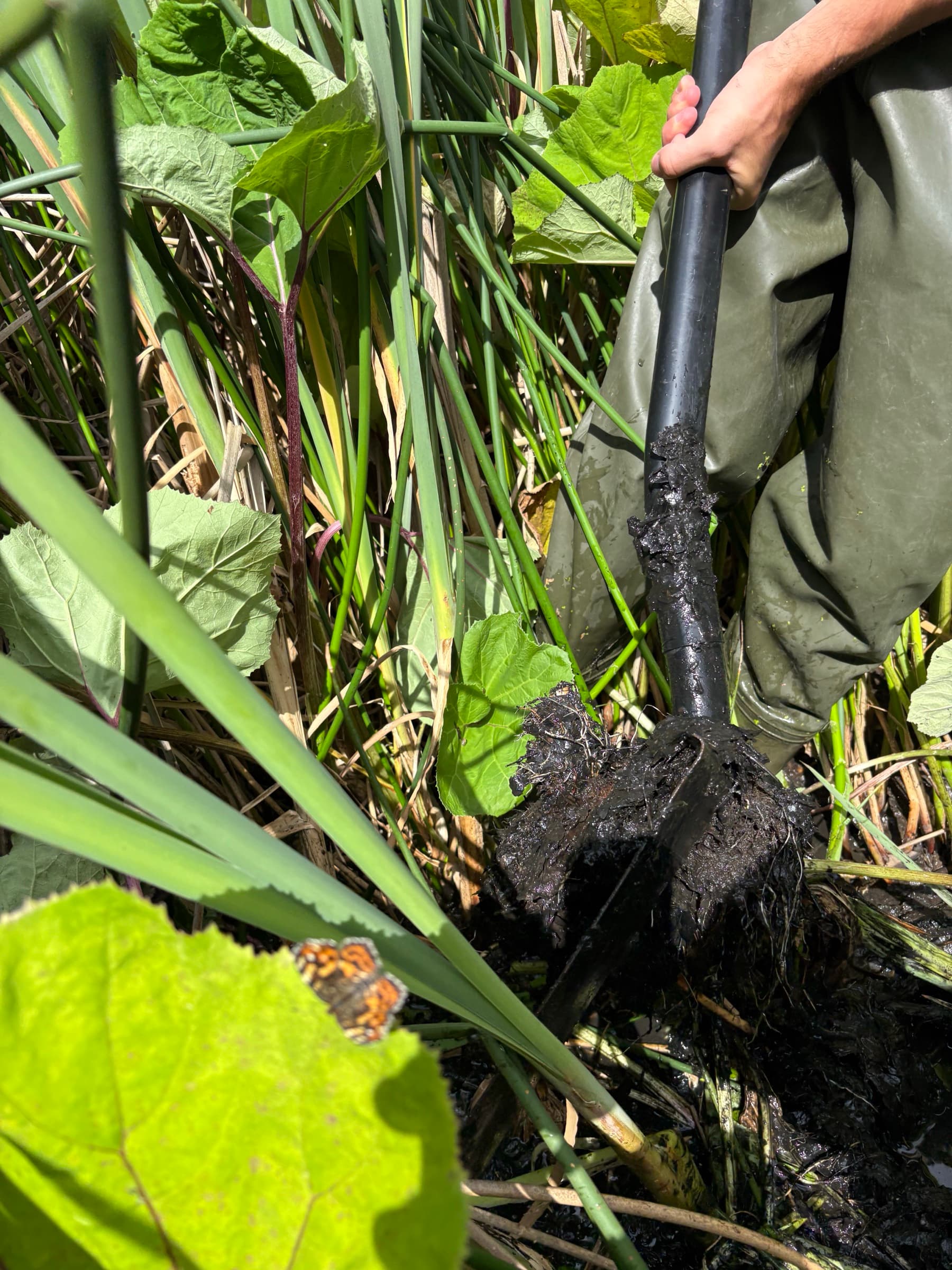
Origin / MudBottle idea
We were not only trying to prove that microbial fuel cells could make electricity. The harder question was whether that energy could be collected, saved, and spent on a real water-treatment step.
01 / question
The idea started with a simple question: could the slow energy produced by microbial fuel cells be harvested, stored, and used for electrochlorination?
02 / concept
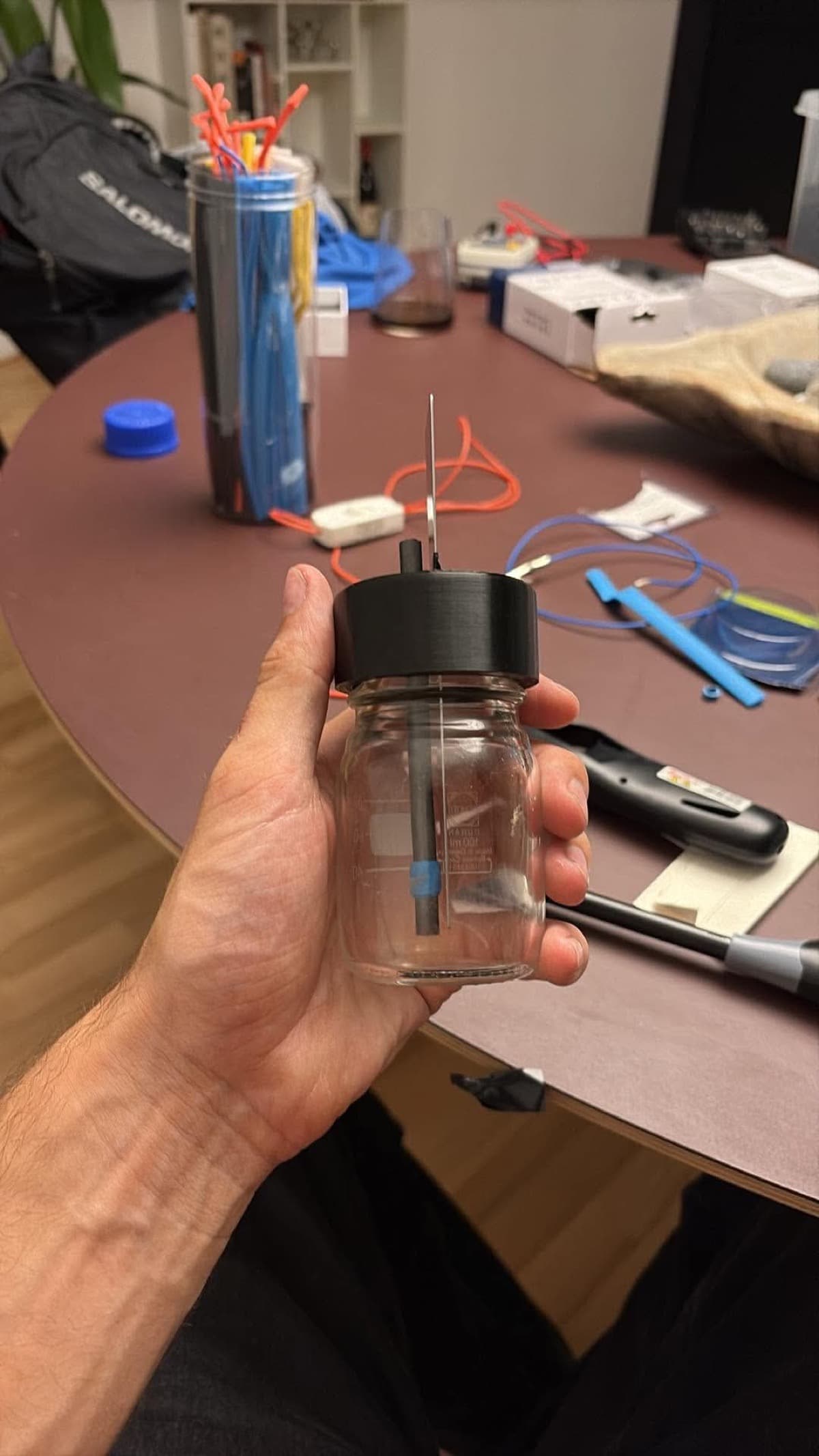
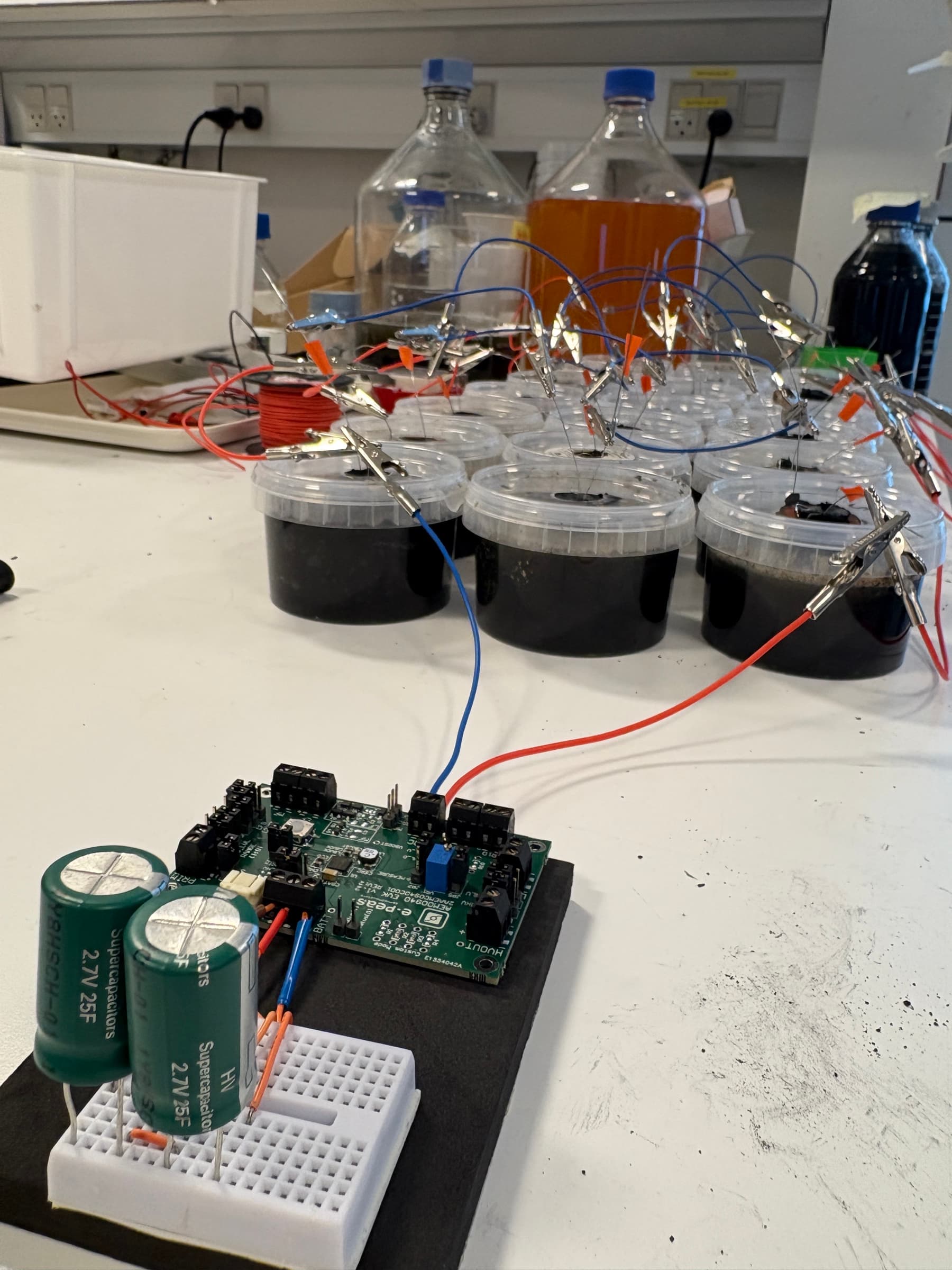
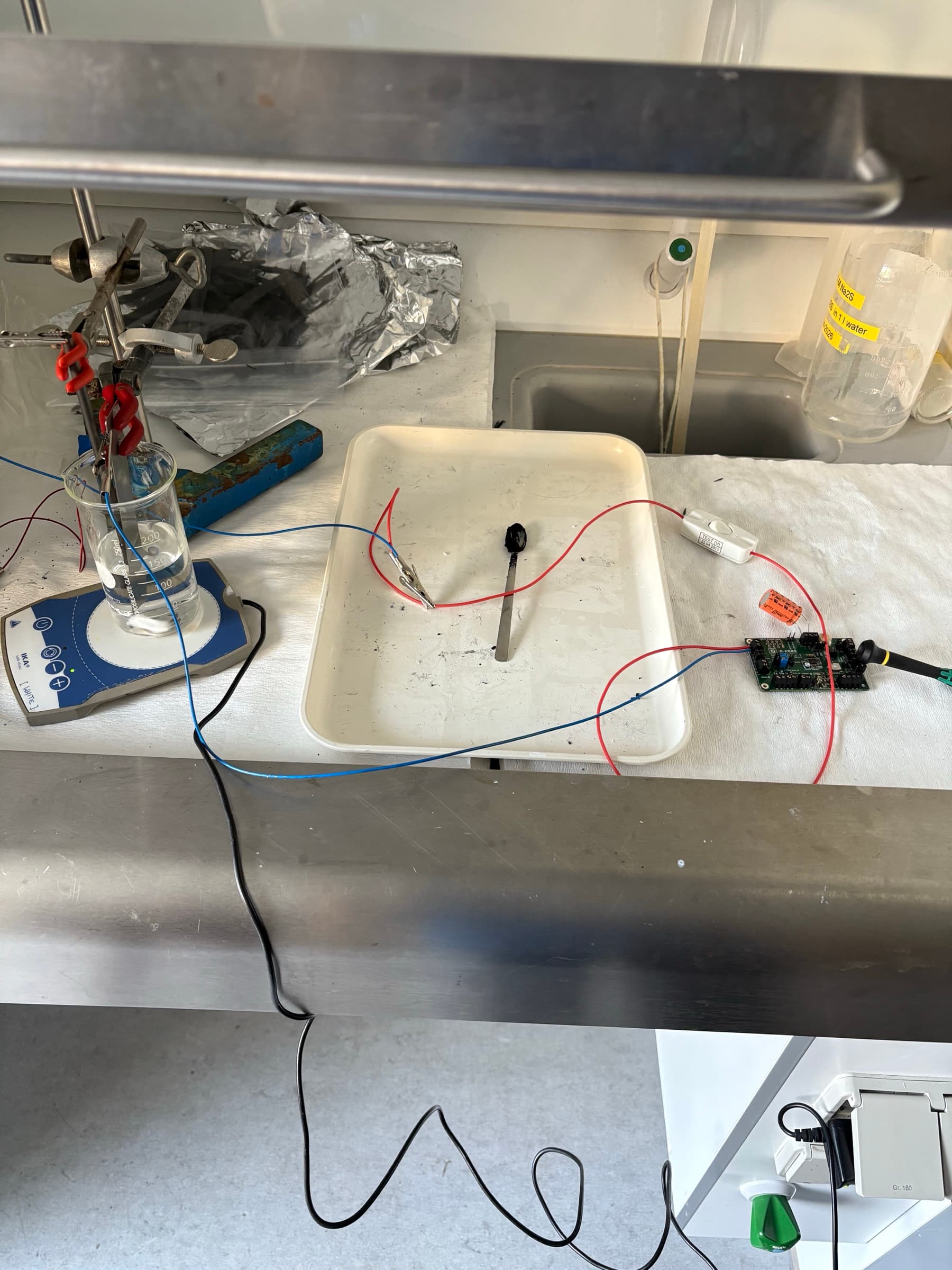
The concept connects four jobs: MFCs generate electricity, a harvester collects it, storage holds it, and the stored energy is released to disinfect water.
03 / material question
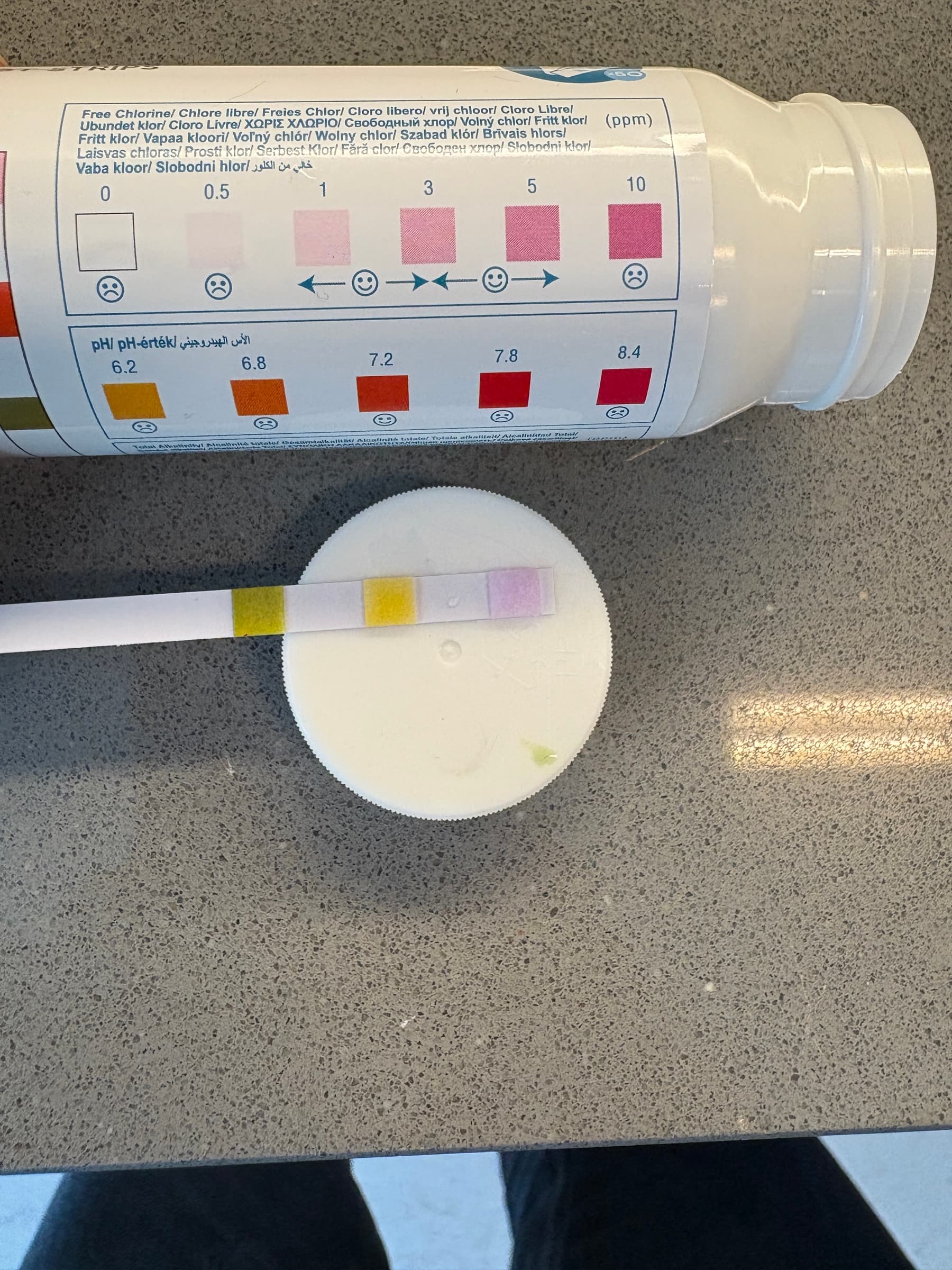
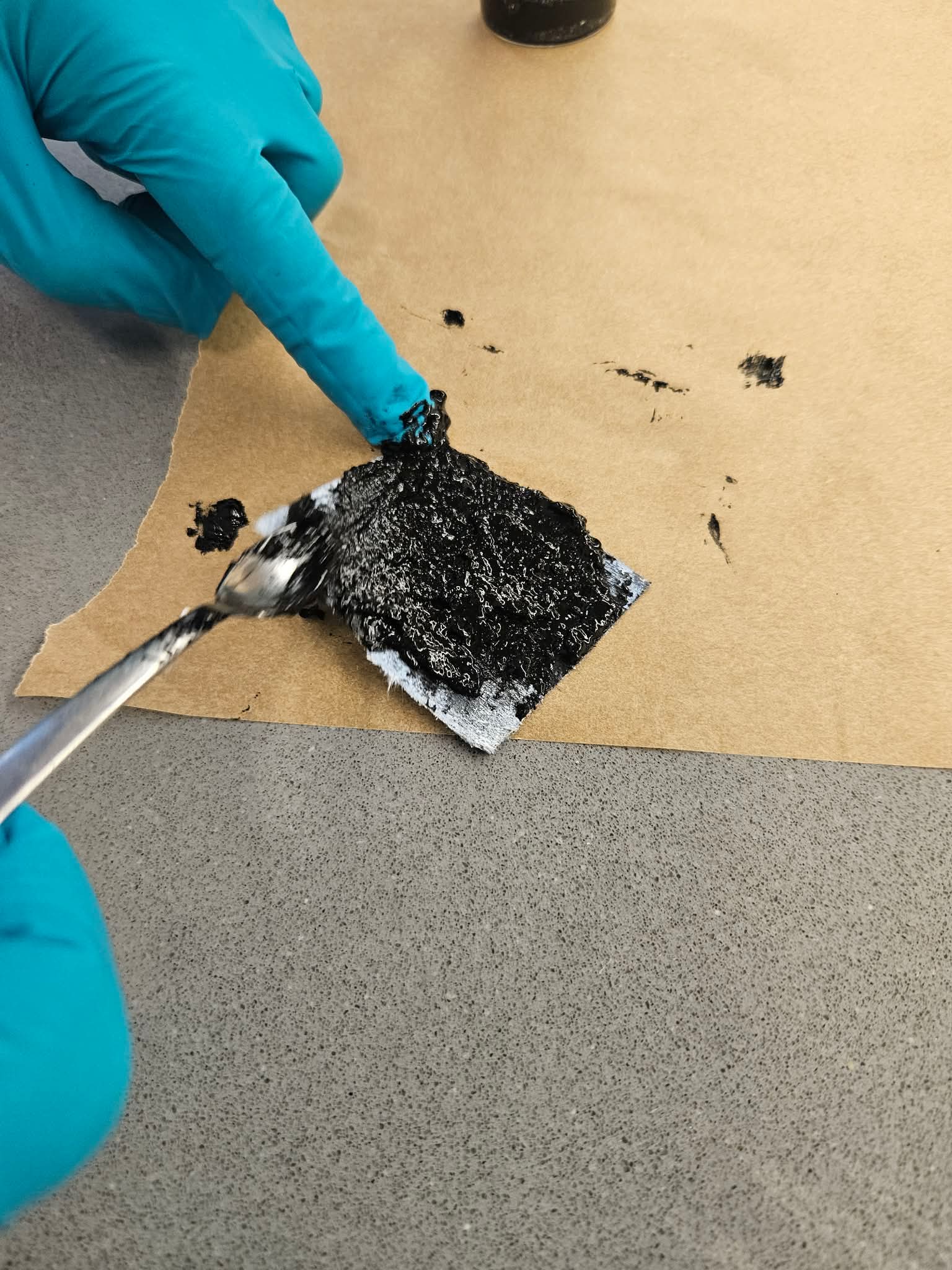
During MFC development, PTFE stood out as something worth improving. That led to testing whether chitosan could replace it as a cathode coating while keeping useful electrical performance.
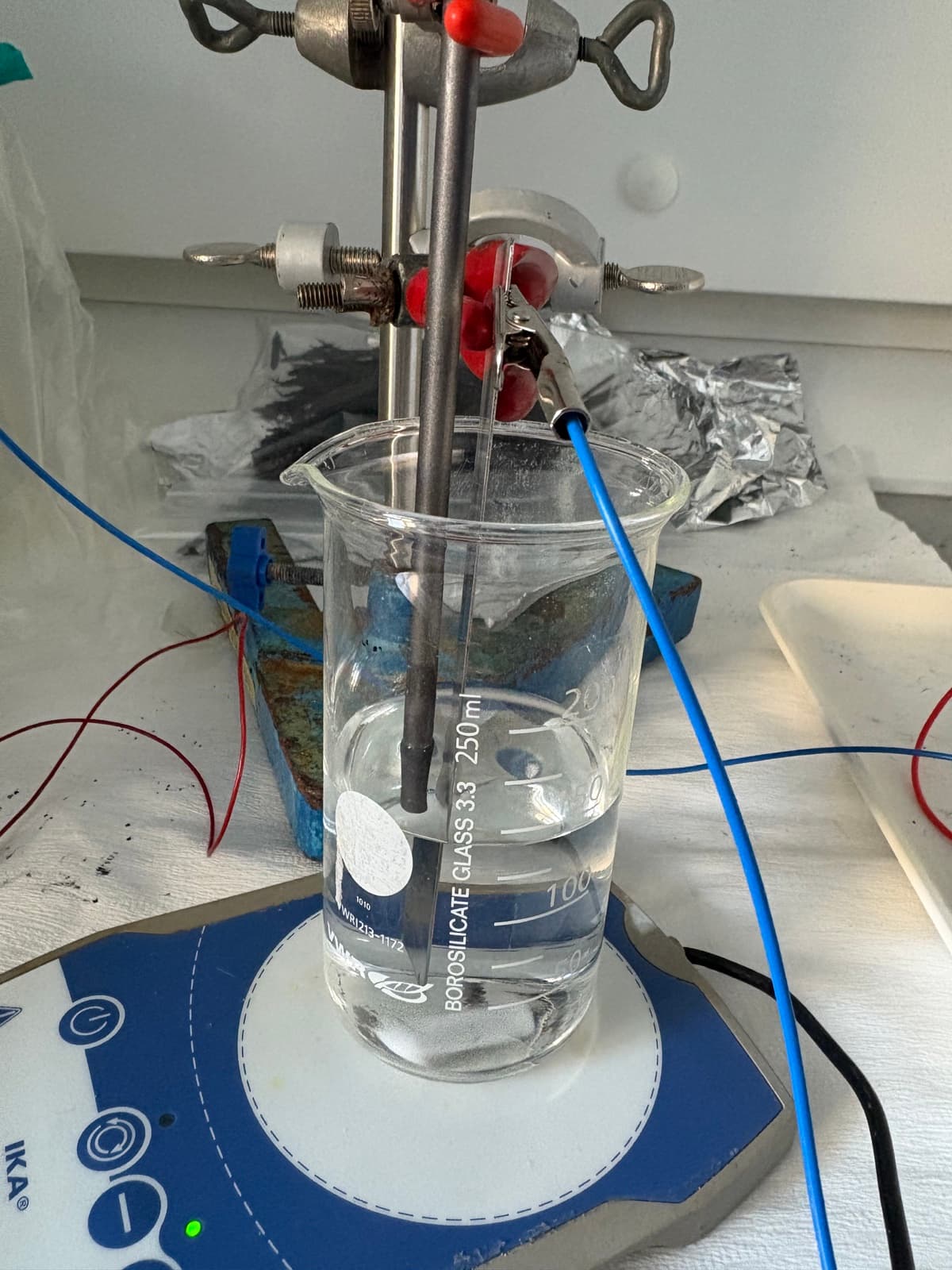
Long-term vision
MudBottle points toward a compact, decentralised system where microbial activity supplies the energy for water disinfection.
Minimal external energy
Useful where infrastructure is limited
Biology, storage and treatment in one loop
Further work
Optimizing chitosan coating
Redesign MudBottle to fit standard screw-cap bottles
Electrode optimization and design
Engineering / iteration
The engineering challenge was making the whole chain work: harvest enough microbial energy, store it, discharge it into electrochlorination. During the process, a question arose: could we improve cathode sustainability?
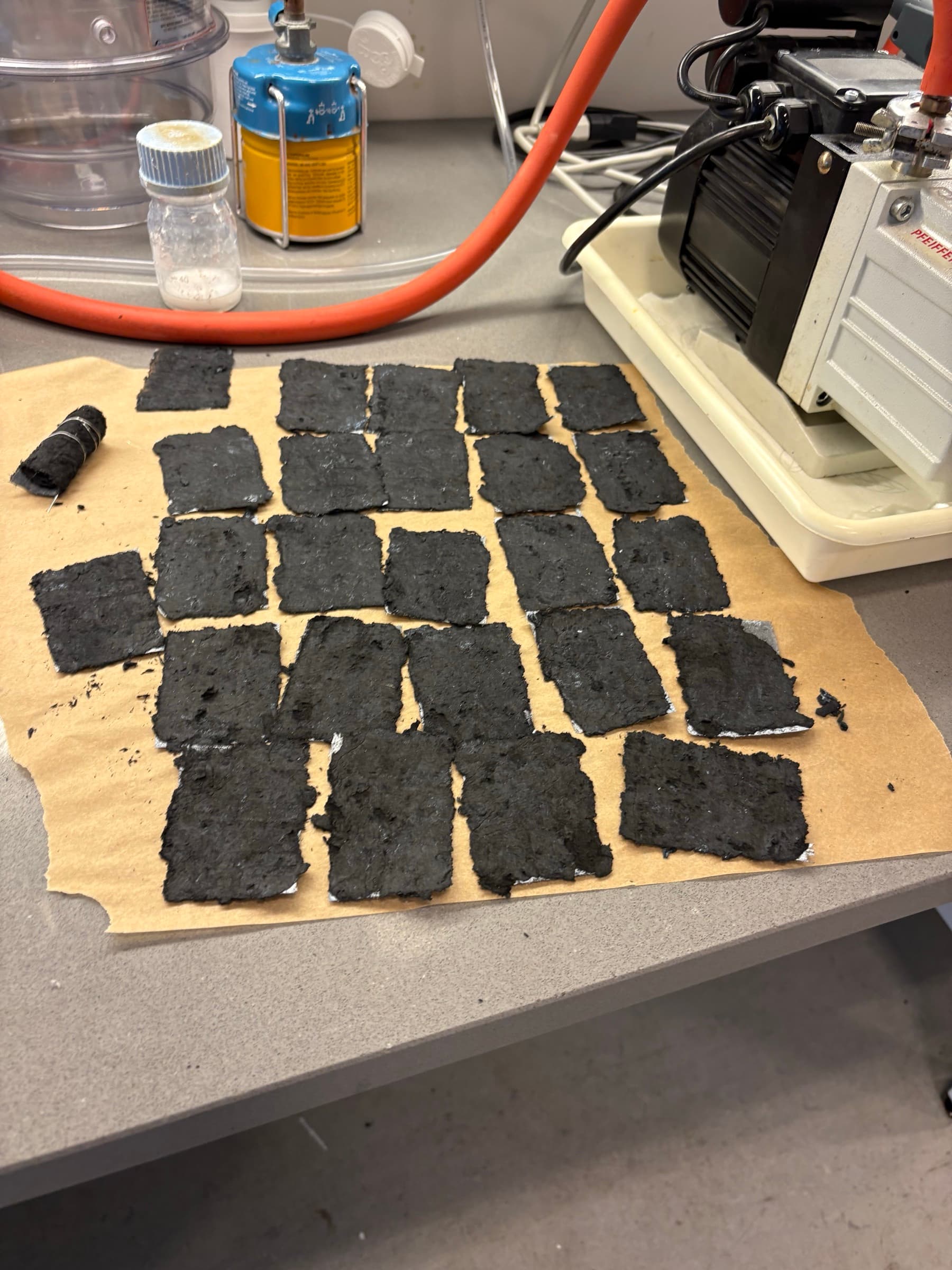
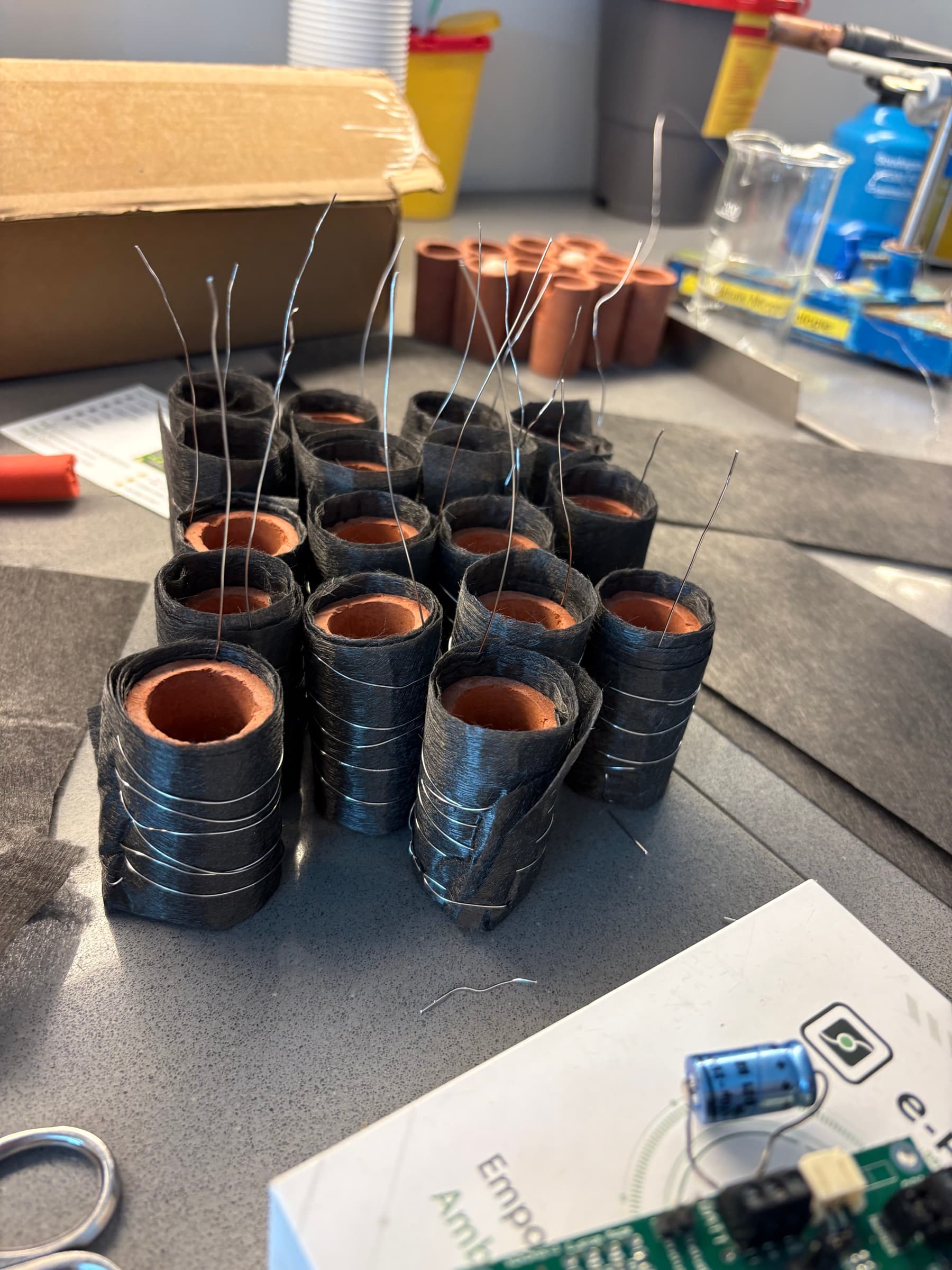
Prepare the cells
The work started with the physical cell parts: membranes, electrodes, wiring, and enough repeated units to construct an array.
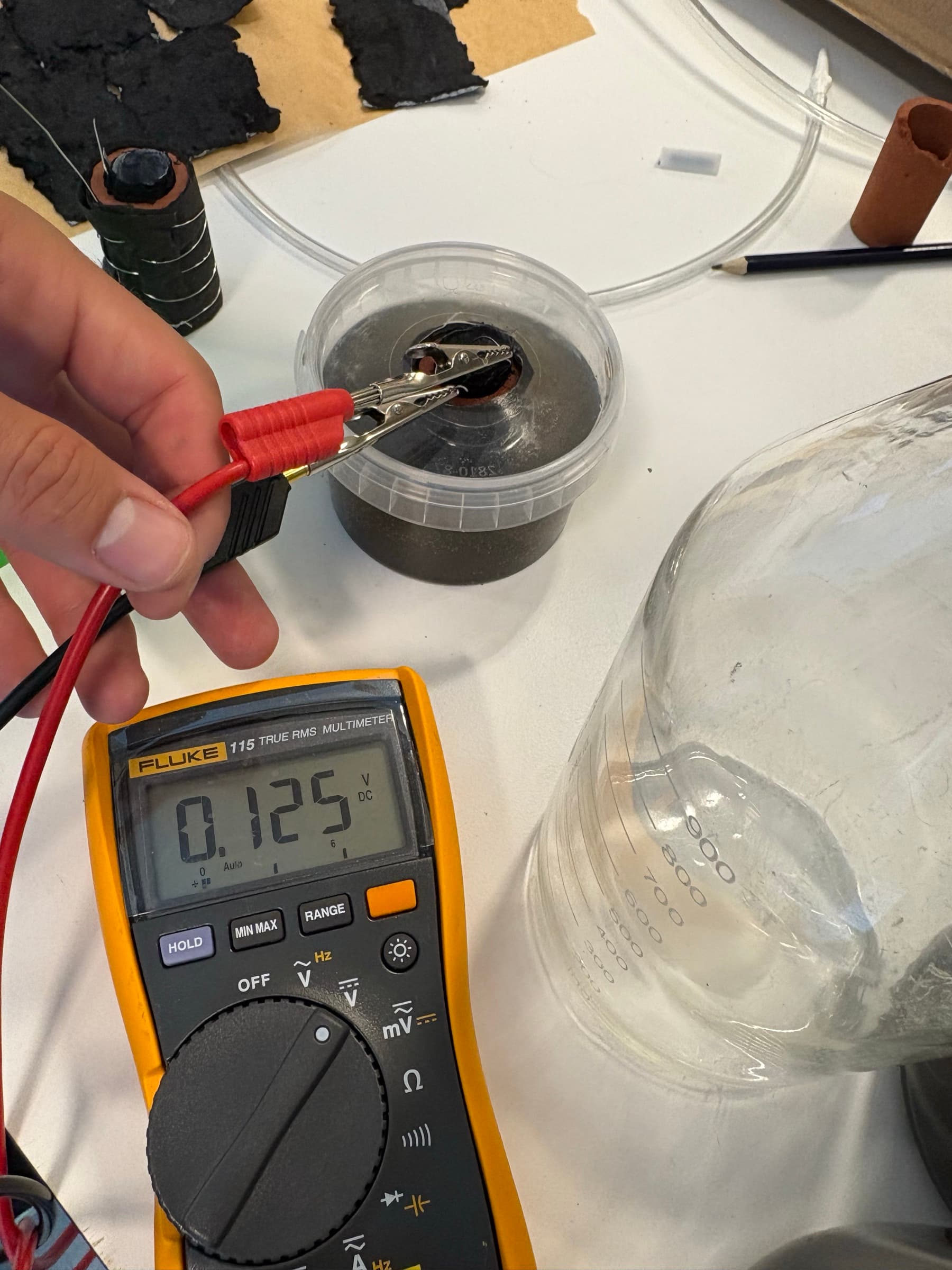
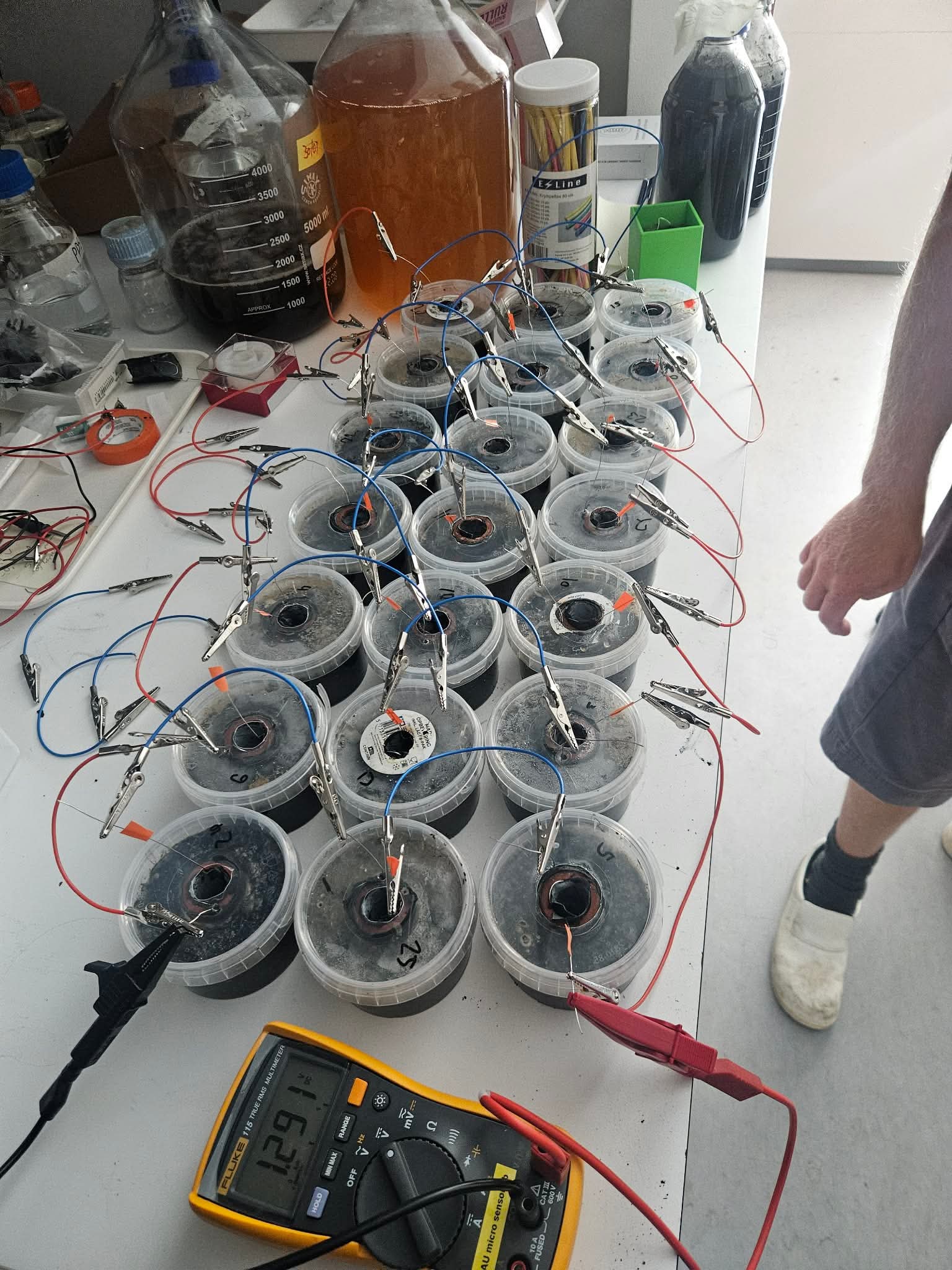
Material turn
With the proof of concept working, the next challenge was making the cathode more sustainable.
Material decision
While the system had to harvest and store enough energy, the cathode raised a second question: could chitosan replace PTFE without losing useful electrical performance?
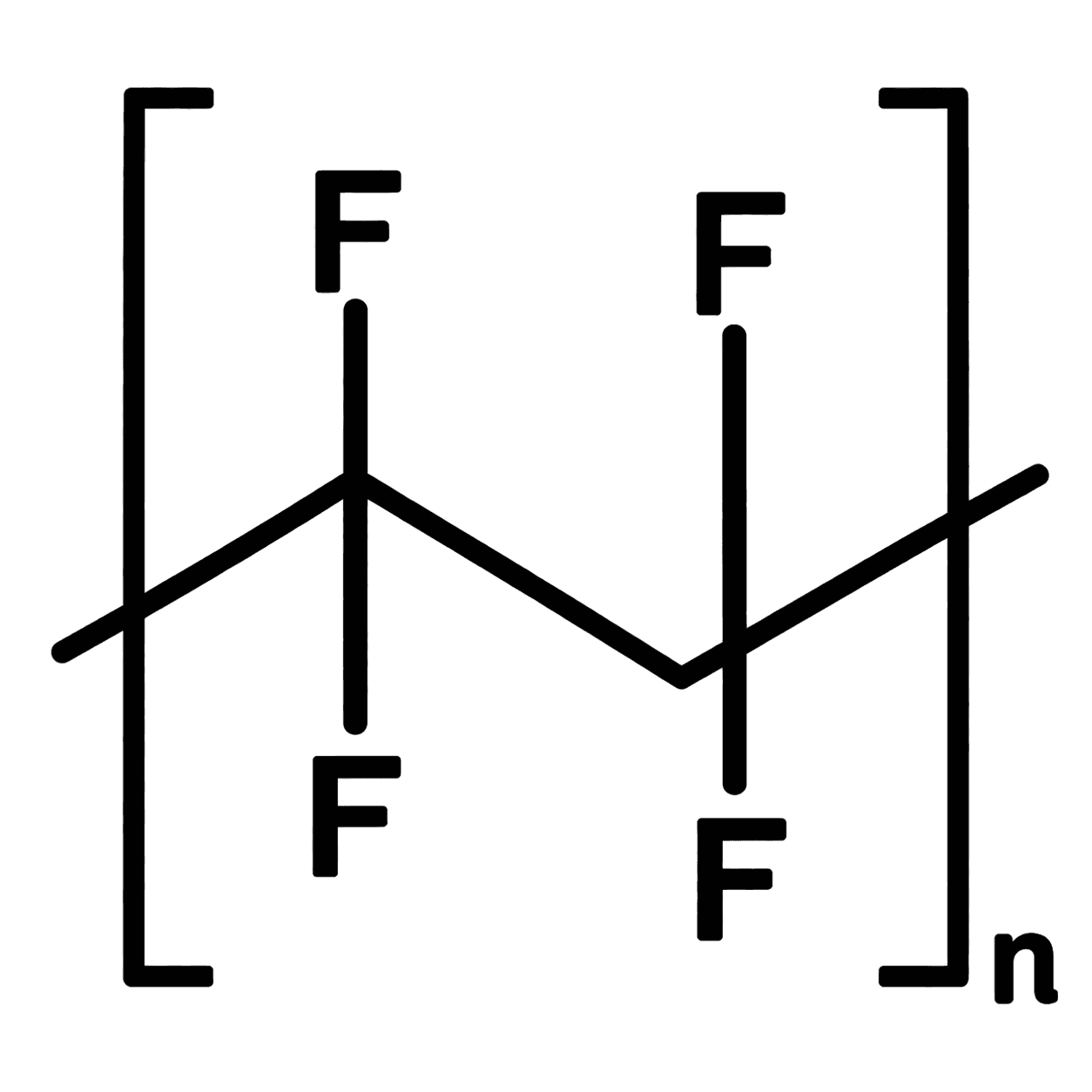
PTFE
Proven cathode coating, but fluorinated and highly persistent.
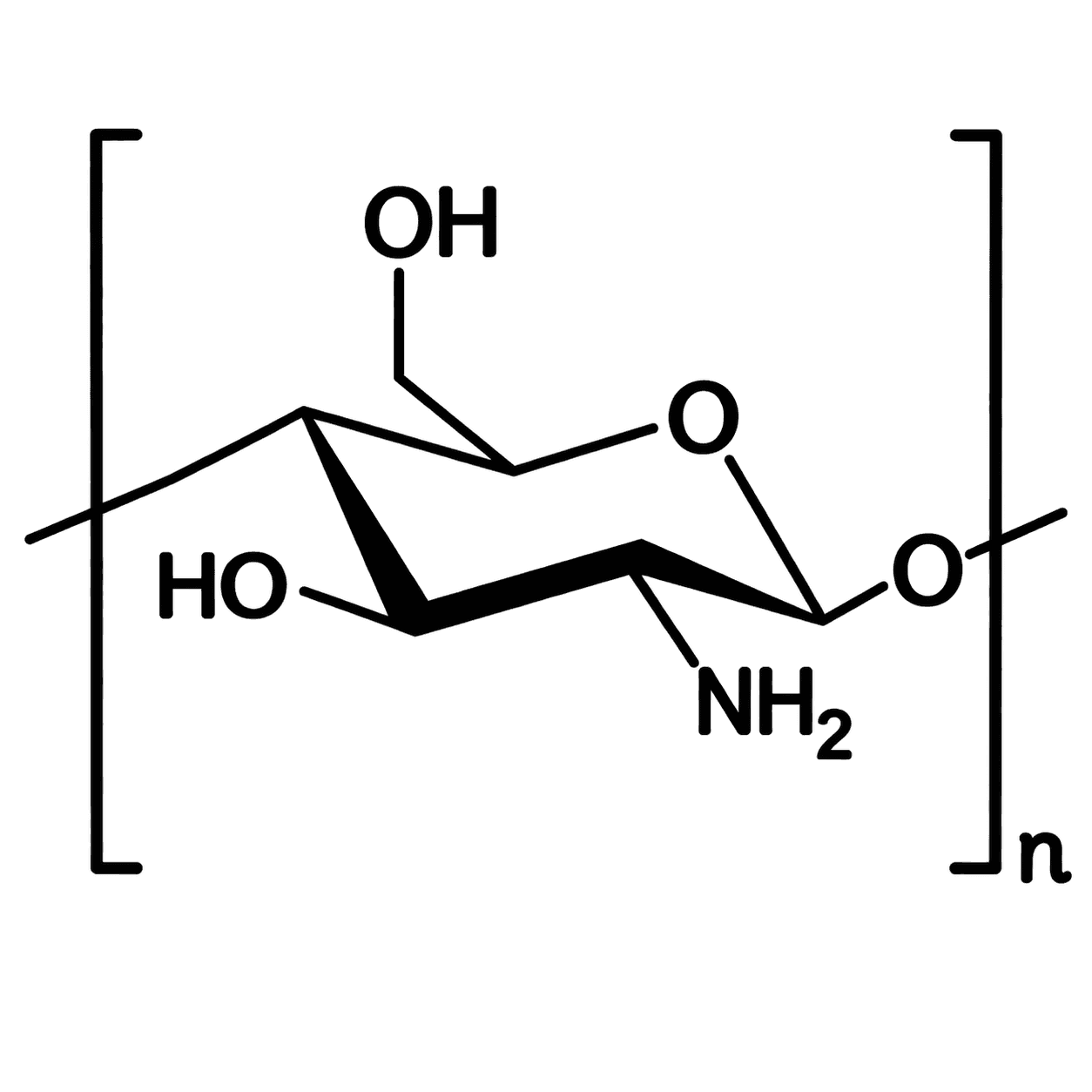
Chitosan
Bio-derived alternative tested for usable cathode performance.
The answer
At a 0.05 g/g loading, chitosan matched or beat PTFE's performance in early testing. A heavier 0.1 g/g loading underperformed both, so the useful range is narrow — worth confirming with more samples before calling it a replacement.
Read full report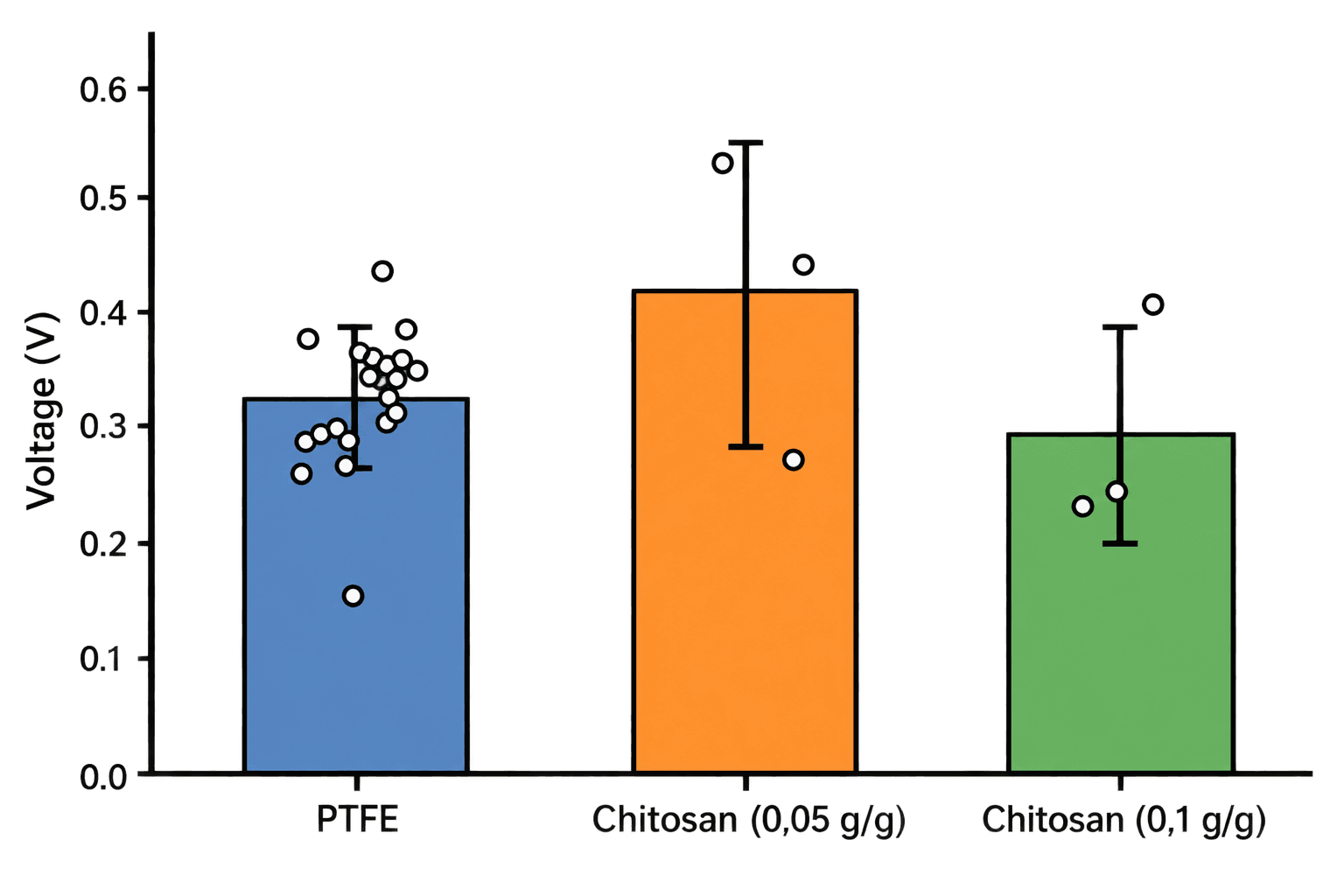
People behind the project